• Home
  • Celebrity
ENTERTAINMENT LA

Kieran Kiely's Lucky Number (s) Keeps Coming Up

10/25/2016

0 Comments

 
Picture
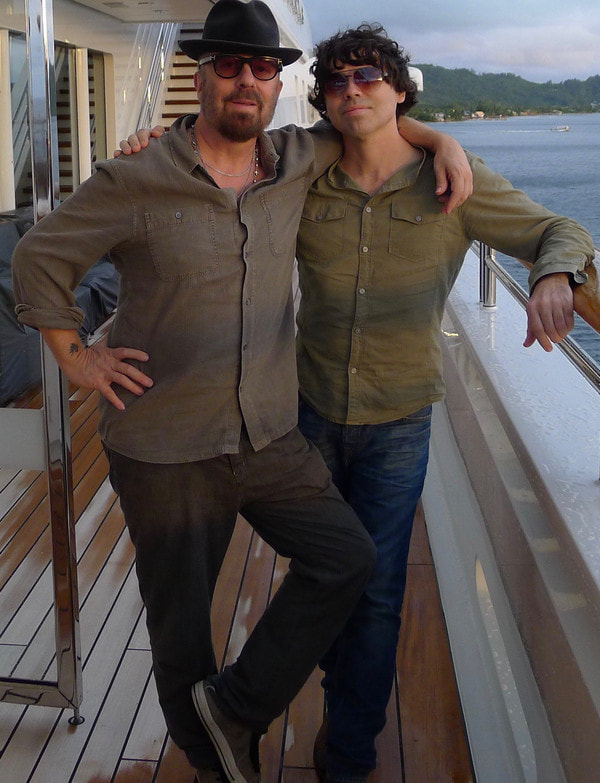
                                      (Dave Stewart and Kieran on Dave Allen's Octopus yacht)
​  Respect and fame are two very different things. The latter comes mostly from the public and the former mostly from peers. Anyone fortunate enough, or rather talented enough to possess both is a major force in any venue. The people that these individuals choose to surround themselves with are highly valued and trusted, meaning that by proxy they also achieve respect and fame…regardless of if they desire this. Consider Kieran Kiely. This Irish born multi-instrumentalist has spent decades performing and recording with artist such as Sinead O’ Connor, Bono, Van Morrison, Stevie Nicks, and many others. It was through his work with these artists that Dave Stewart first noticed him. Stewart is recognized as half of the iconic band The Eurhythmics (with Annie Lennox), but he is equally (if not even more so) respected as a producer in the music world. As the type of musician who is globally successful in creating his own music as well as the music of others, being cherry picked by Stewart automatically increases your visibility among the most well-known and gifted artist in the world. While Kiely was already one of the recognizable multi-instrumentalists in the pop/rock world, working with Dave Stewart meant that he would be exponentially more visible amongst the elite members of the music world’s “insider” group. Kieran and Stewart worked together on a number of different projects including the one that bears his name (2013’s Lucky Numbers). Performing and recording with Stewart, Kiely’s achievements as a consummate professional and abilities give testament to the reasons so many famous artists have chosen to play with him.
  Kiely recalls his first meeting with Stewart, stating, “My first memory of Dave was when I turned up at his studio in London to do a session with Sinead O’Connor and Terry Hall. I was wearing this black leather jacket and was sort of just wandering around the control room waiting for the session to start, when I turned and saw Dave with his hand in my Jacket pocket with a big smile on his face. It was just his way of saying hello, and having a bit of fun. The session went really well. It was at Dave and Annie’s studio, a huge old converted Church in London. It was a great time for me, I was beginning to work with some very successful Artists.” Kieran would work with Stewart as a producer on O’ Connor’s Faith and Courage record and other recordings, including 2014’s 24 Karat Gold: Songs from the Vault by Stevie Nicks (solo artist, Fleetwood Mac). Stewart describes his affinity for Kieran’s playing as he states, “Kieran is a killer instrumentalist and not only a has wonderful sense of melody and rhythm but he also has a total grasp on complex arrangements for any instrumentation. Through having masses of experience he has an understanding and knowledge of so many different musical genres that is so hard to find amongst many current musicians. His work with me on my solo albums and my production work on artists such as Stevie Nicks or Martina McBride has always been done with a huge enthusiasm for his love of music achieving excellent results. Basically he is one amongst very few who can create so many different sounds; he is like a one-man orchestra!” Playing with artist like Sinead O’ Connor, Bono, etc. would be an ego pat for anyone but, having an iconic musician and producer such as Stewart become so smitten with your playing that he enlists you to be a part of his own recordings and touring…that’s an achievement that very few people can boast about.
  When Dave Stewart asked Kiely to record on the sessions for the Lucky Numbers album, Kieran had no idea how different the sessions would be. Stewart is not only creative in his music but also in his approach to capturing and creating it. For Lucky Numbers, Dave wanted to record in a very unique situation and place himself and the session artists in a distinct state of mind and experience. The band (consisting of Stewart, Kiely, and a collection of Nashville session aces) to record on a boat in the South Pacific over a period of twelve days. Stewart seemed to be desirous of placing the musicians in a state of mind that would affect their playing and sensibilities toward the music of this record. Regardless of intent, all those involved stated that working with Stewart and being in this environment definitely created a harmonious vibe. Kieran proclaims, “It was a pretty easy going atmosphere. More like a vacation with some recording on the side. Dave would present a song to us in the morning, we would listen to it once or twice and then record it, all playing together live… two or three takes max and we were done. After that, we’d take a break and have a long lunch, followed by the same thing in the afternoon; record another song and then maybe take a boat trip to one of the islands, have a swim, and back to the yacht for Dinner. It was one of those situations when you realize, it just doesn’t get any better than this.” This pace insured that there was no way to over think the parts by the musicians. Dave even wrote some of the songs while on the trip, guaranteeing that he played by the same rules as everyone else. Everything was recorded live over ten days (no over dubs except for guitar), with Stewart giving very little direction or stipulations concerning parts. He had hired Kiely, like all of the musicians involved, to create in their own voice and with the emotions that they were feeling at the time. This meant that there was also no pre-production for Lucky Numbers. The record truly was an artistic experiment to see what these talented artists could create at one specific moment in one specific place.
 Kiely admits that he loves the creative space which the studio affords, but he can often miss the stage and a live audience if denied them for too long. Touring with Dave Stewart in support of Lucky Numbers was as enjoyable a situation as the sessions had been. Kiely’s abilities as a multi-instrumentalist brings many strengths to any gig that he is on. Stewart made great use of this, employing Kieran to perform on Hammond Organ, Accordion, Flutes, and Bodhran. The tour consisted of songs from Dave’s classic category (such as “Sweet Dreams” by the Eurhythmics, etc.) as well as the new songs that Kieran had been a part of creating. Due to Dave’s long career and respect among his peers, many guests came out to the shows to “sit in” and play with the band. Kiely notes, “John Mayer got up and played at the Troubadour in Hollywood with us. That was a great night. He’s a talented guy. He played some great guitar that night. Vanessa Amorosi is an incredible Australian singer that guested with us several times. We also shared the stage with Martina McBride, Delta Goodrem, Orianthi, Thomas Lindsey, and Colbie Callait. So many amazing artists would come out to see us and play. It was truly an un expected bonus to playing in Dave’s band.”
  While Kieran Kiely still performs live, the focus of his work these days is on composing and orchestrating for film. He lives in Los Angeles, a musical hub of music and film…perfect for the talents and pedigree of such a lauded musician.
 
 
0 Comments

BRIAN MANCINI COMMUNICATES THE IMPORTANCE OF DRYLAND

10/19/2016

0 Comments

 
Picture
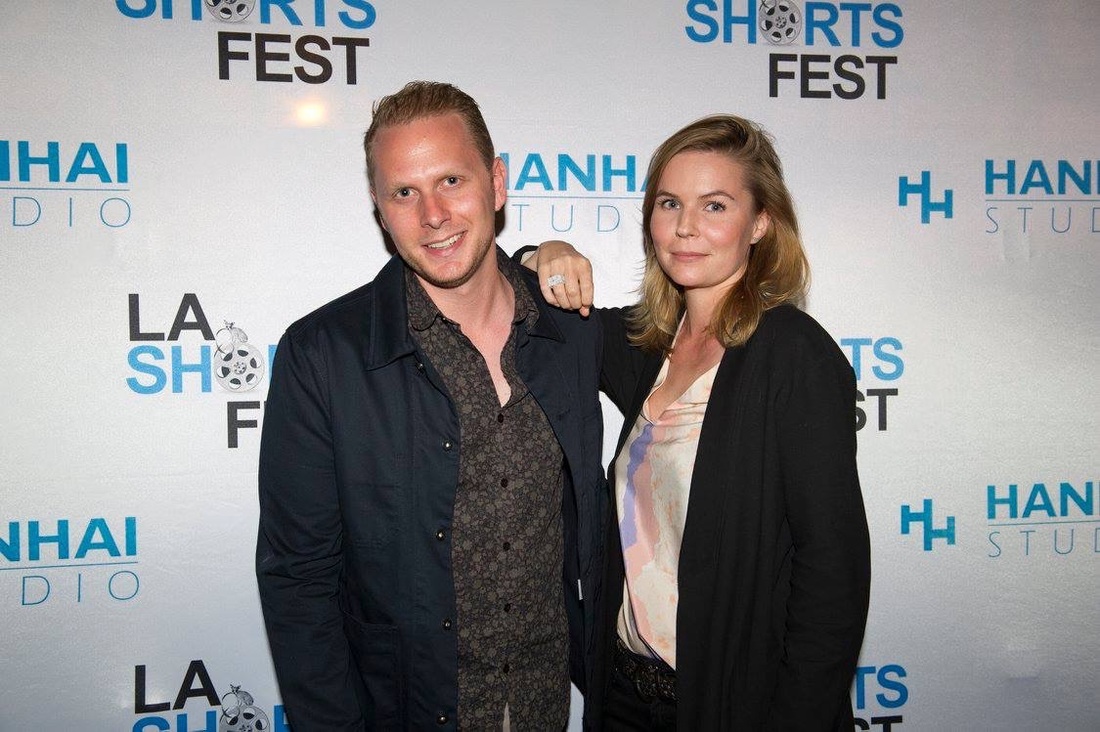
  The reasons for making films are as numerous as the genres of films being made. There are family films which provide a tension free environment for all ages, horror films to frighten you, bawdy films for the edgy crowd, musicals for those so inclined…there are literally too many to mention. While some filmmakers want to further the art and others may simply desire a big box office, Liv Prior Colliander has used film to portray her interest in exploring humanity’s fundamental loneliness, and how that loneliness affects our struggles to fit into the rules of society. She is drawn to characters with identity crises who fight, often humorously, to hold themselves together in the face of our chaotic world. Colliander is a Danish writer/director living in Los Angeles and had been searching for the right person to work with her on her film Dryland; she found this person in Brian Mancini. Mancini is known for his work as a producer on films like: Rita Mahtoubian Is Not A Terrorist, The Touch, Star-O, and others. Dryland deals with an attempted suicide and Colliander needed a producer who was able to manage some potentially dangerous filming scenarios as well as someone who understood the deeply personal message of this film. About Brian, Liv comments, “Brian is such an outstanding Producer and I cannot be happier that he produced my film Dryland! We started discussing the idea in 2014 and before I knew it we had all the funding needed and were shooting the movie in 2015. Brian supported this film with 100% of himself. He was always there when I needed him and knew the plan of action of how to overcome any obstacle. He understands production so well that we were able to do some amazing things with underwater photography, working with children, using a giant underwater crane, and exploding a car window. He works so hard and his work brought the movie to life. We had several hard to lock locations but Brian made it happen as he always does. Whenever I had a problem creatively on set I would go talk to him and he would help me find the best choice in the scene. He really knows how to not sacrifice production quality and story for money. Brian understands every department on set as he grew up working in the industry in every department. Even in pre-production he would have a good idea of what we could do with the amount of money we had. Today, Brian and I are still working together and I can’t wait for more people to see DRYLAND as it’s in its run at several festivals.” Some of these festivals included: LA Shorts Fest 2016, Las Vegas Film Fest 2016, Soho International Film Fest 2016, NYC Independent Film Fest 2016, Laughlin International Film Fest 2016, American Film Festival 2016 in Poland, and was selected as a nominee for the Golden Egg award at Reykjavik Film Festival 2016.
  Dryland is the story of a young swimmer’s attempt to work through her trauma in the water, trauma brought about by her mother’s attempted suicide. It is an event that has created a breakdown of communication in their home. The discomfort placed on family communication as well as the social stigma of a situation such as this. Brian remarks, “Working with Liv on Dryland was fantastic. This story was very personal to her so I could see the importance on getting it done right. This film touches on the social issues of dealing with depression and mental health. After an attempted suicide, there is an inability to communicate about how a person honestly feels. When attempting to recreate this subject matter, it was so important to do extensive research on real life experiences. Liv really understood what it’s like to go through such trauma and managed to direct the actors so that they gave incredible performances.” With both Colliander and Mancini so intent on evoking the feeling of this theme in a very personal sense, chances were good that this goal would be achieved, but it was not without its hurdles. While the swimming competitions called for a very specific location, a number of young actors, and specialized equipment like the underwater crane, both budgetary and safety concerns exceeded the normal production levels. Discussing his approach, Brian states, “From the very beginning we knew that the locations in this film needed to match tonally. We didn’t have the funding to fully build any sets thus we needed to go out and hunt down places that we felt matched. The main issue was that sometimes the best places would be way out of budget or unavailable for when we needed to shoot. The hardest location to lock down was the Celes King III Swimming Pool. The pool had a very full schedule and we couldn’t interfere with the normal operations of the pool. This forced us to be very creative and maximize the amount of time we could afford. The entire team felt that Celes King III Swimming Pool looked so unique when compared with other pools. We wanted to give our film a sense of uniqueness while still seeming normal. When shooting at a public pool we needed to work with Citywide Aquatics, Film Park Office, and FilmLA. It’s important to keep everyone informed of everything we wanted to do. In this location we had to create a full competitive swim meet. This included lots of background actors, stunts, body doubles, swimmers, judges, lifeguards, and we also brought in a giant underwater crane.” Mancini continues to discuss his safety approach by revealing, “It’s so important to set up a very specific plan of approach for each shooting day. I like to make sure that everyone is on the same page. We hold mandatory safety meetings before any dangerous situation to lower all chances of anything going wrong. We also hire specific crew (i.e. Studio Teachers, Lifeguards, Medics, Special FX supervisors, etc.) and use their expertise in getting the shot we want in the safest way possible. Once I had the proper individuals on set it became much less stressful and everything moved nicely. Every production is a different monster and can have either a smaller or bigger footprint. The number one responsibility is to make sure everyone can do his or her job safely. When spending large amounts of money on a single production day, there is the pressure to get all the shots needed to edit the film. It’s important to notice if the shooting plan isn’t realistic and change the plan so that no dollar is going waste. In these situations, it’s crucial that the crew and cast are being utilized appropriately and not taken advantage of.”
​
  The relationship between writer/director Liv Prior Colliander and producer Brian Mancini on Dryland is indicative of the respect and mutual admiration of all professionals involved in this film. When telling a story as emotionally cumbersome and yet, capable of potentially assisting others who have faced similar obstacles, it seems that this relationship is not only beneficial but critical in bringing the filmmaker’s vision to fruition.


Picture
0 Comments

ARTIST BINBIN MA USES HER TALENT TO APPROACH DIFFICULT SUBJECT MATTER IN A BENEVOLENT WAY

10/19/2016

0 Comments

 
Picture
​  People often like to claim that things are dead. Chivalry is dead, Rock & Roll is dead, etc. In truth, many things simply change form. Critics and purists of the art world sometimes say that Art is dead (referring to the visual art forms of sketching, painting, etc.) but it is just as vibrant as ever. The talented artists who train for, and practice this trade, have simply found modern ways to support themselves doing so. For example, Binbin Ma is the storyboard artist known for her work on many different film productions. While a Renaissance artist may have sat in a study focusing on image of a noble lady or lord, or bowl of fruit; modern artists like Binbin use their talents to materialize the images and ideas described to them by directors and producers to initiate the images that millions…even billions of moviegoers’ witness. If our society accepts filmmaking as an art form, then all of those involved are valid artists as well. Ma’s work and the many films she has been a part of have already received numerous critical accolades, testifying to her tremendous achievements as a storyboard artist as well as a member of the filmmaking community.
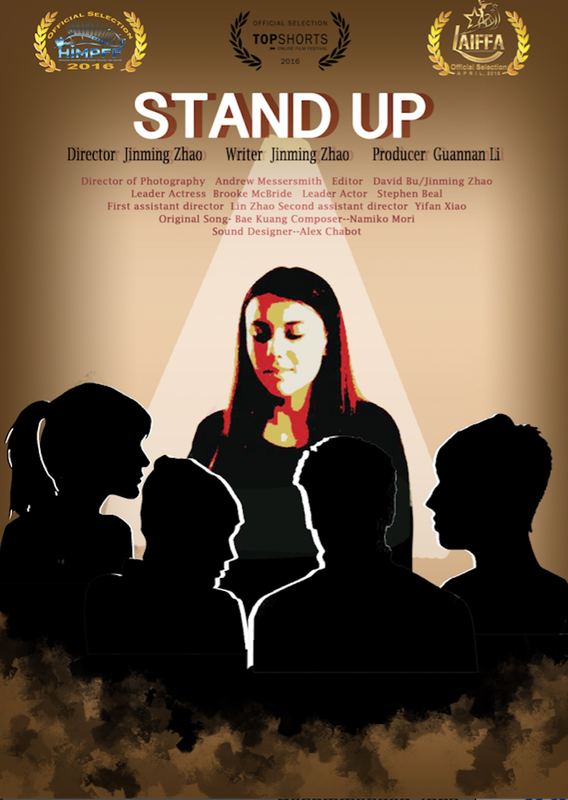
  Stand Up is the 2015 film by Jinming Zhao about a young girl who is pushed too far. The film was recognized in 2016 by the Hollywood International Moving Pictures Film Festival and won the Audience Choice Award at the Top Shorts Film Festival in 2016. Stand Up is the story of Emma, who must deal with her estranged and derelict father who returns to collect money from the will of Emma’s grandfather who raised her. This situation results in Emma, formerly mute, speaking up for the first time to challenge her father and his devious plan. Binbin states that she typically likes to work with different directors due to the influx of new ideas and approaches. Ma enjoyed the experience working with Jinming whom she describes as particularly creative; an ideal collaborator for someone who enjoys new ideas. Zhao declares, “Stand Up has been one of the most successful endeavors of my career. Thanks to the incredible film that we were able to produce as a direct result of Binbin’s prominent influence, we have been vastly awarded and exhibited. The incalculable success that our film received is doubtlessly due to the high quality of film that we were able to produce – a feat I attribute wholly to the leading role of Ms. Ma as our storyboard artist and graphic designer.”
  
Picture
​  One of the attributes that Binbin is known for in her work is her particular talent at working on projects that revolve around young people. Though she is known to work well with a wide variety of subject matter, Ma has exhibited an exemplary ability to capture the emotions of young people in difficult situations. Working with the director and cinematographer to conceptualize the images that will be the template for shooting, Binbin not only creates the images but also uses her understanding of composition and framing to relate and define the emotional impact the audience feels. Nowhere else was this aspect as present as in the film Happy Tree. The film addresses the impact of war in a very personal way. Happy Tree (winner at the Los Angeles Independent Film Festival, Official Selection of the Europe International Film Festival, presented at Hollywood International Moving Pictures Film Festival, and Los Angeles CineFest) is the story of an aging American war reporter who is suffering alone in a French hospital during World War II. He blames himself for the disappearance of his son who was lost on the war front. The reporter meets a young orphan who befriends him and teaches him about hope; a hope which enables him to find the strength to accept the loss of his son. The film was emotionally overwhelming for Binbin, even though she helped create the images herself in the storyboard construction. She reveals, “Happy Tree is a very moving and emotional film. During the process of storyboarding, we had discussed the shots with the DP and director. There are many emotional shots that touched me, even though I had seen them in my own mind and on my storyboards. The scene in which the boy places the photos on the ground, growing a memory tree… that is the moment that breaks my heart. How tough and the strong the boy is!  No matter how life sucks, he is always positive and has faith in the future; that action teaches adults as well as children.”
Picture
​  Yunyi Zeng is the writer and director of Happy Tree. Yunyi knew that she was going to require a great deal from a storyboard artist on this film, which made Binbin the best choice for the position. Zeng comments, “We hired Ms. Ma for this film largely because of her previous achievements as an artist of great renown. She is well known among her peers for the impeccable work she provides when she is involved with a film. Binbin performed several leading roles for my film; both that of leading graphic designer as well as leading storyboard artist. Binbin helped me to plot out the production of the film by coordinating with my director of photography and art department to create a visual guide to follow. She mapped out various aspects of the shoot, including general cinematography, blocking, and the overall look of the frame. Ms. Ma’s indisputable skill as a leading graphic artist and storyboard artist allowed the rest of the film to be completed without a hitch, a true testament to Ms. Ma’s leading presence and skillset as a storyboard artist. We undoubtedly owe much of our film’s enormous critical acclaim to Ms. Ma.”
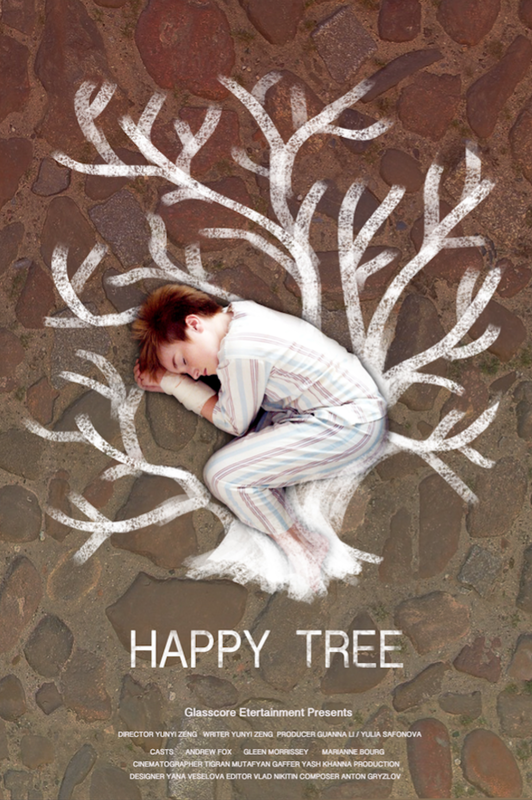
  Her work on numerous productions has left her with an affinity for each of them. She will admit to one welcome surprise that has made her especially proud of and fond of her work on Happy Tree. While the crew of the films which Binbin has worked on are well aware of her consummate talent as an artist, the general public often is robbed of direct viewing of Ma’s considerable artistic abilities; not so with Happy Tree. Binbin reveals that she was prompted by Yunyi to create the film’s poster. Zeng was such a fan of the visual style of Ma’s storyboard creations that she felt they were intrinsic to the mood of the film and should be a part of its identity to the general public. Yunyi states, “Ms. Ma designed the poster for the film, which embodies its theme and provides the audience with an intuitive sense towards the tone of the film. She designed a poster that resembled a chalk drawing, using a tree as the background, with a boy cowering on the ground before it. The infantile look of the boy, paired with the protective and nurturing connotations of a tree allowed the poster to encompass the overall theme of the film in a way that I could not have envisioned better if I had told her myself.” This statement alone gives proof that Binbin Ma is exactly the kind of storyboard artist and graphic designer that filmmakers yearn for; someone who can understand exactly what they need and even sometimes anticipate this. 
0 Comments

LAPPALAINEN HAS THE EYE THAT MAKES FILMMAKERS SMILE AND AUDIENCES BELIEVE

10/11/2016

0 Comments

 
Picture
​  Mari Lappalainen has a natural talent for creating (or recreating as the case may be) the look for a film. In the same way that Master Anthony Anselmi is able to discern fine wines or Thom Yorke conjures haunting melodies that introduce us to the emotions we were never able to define for ourselves, Lappalainen has a predisposition to both “seeing” and understanding what is required for a film set to transfer authenticity to the actors and crew, to say nothing of the audience, that inhabits them. As both an Art Director and a Production Designer, Mari has used her heightened understanding of surroundings to the benefit of many television and film productions. A profession such as this requires a team player…someone who is not attracted to the spotlight. While many critics and audiences seldom point out how believable the surroundings or props in a production might be, both are quick to note when these factors are distracting. It’s the type of thing that, when done extremely well, goes unnoticed and all too often underappreciated. It’s a stipulation that is not difficult for Mari, who is happy to be the talented professional behind the highly visible professionals.
  As Production Designer of 2014’s Zelos, Mari wanted to create a current day look with a slightly forward thinking style. Zelos tells the tale of Maria, a competitive woman in her late 30’s who orders a “Zelos” clone to help around the house.  She does this so she can spend more time with her family, but mostly to enable her to compete with her flawless friend Ari.  As the story unfolds, Maria realizes that her willingness to do anything to overshadow Ari has blinded her from what is really important in her life; her family.  She soon realizes the clone she purchased is her biggest rival of all. The film which concerns itself with modern technological advances, the approaching relevance of A.I., and how it will effect humanity on a very personal level, gave Mari the opportunity to imagine how the world might look. She needed to give a familiarity to the setting as well as portray a sense of how things might become very soon. The style was most present in the clones themselves. Lappalainen communicates, “For Zelos, we wanted the concept of cloning to be something that was mass marketed and manufactured; a part of a regular life. This made our choices a little easier. Style-wise, I wanted to utilize mid-century/modern/clean lines and quirky art work. I wanted to emphasize the normality of how to order a clone from a delivery service; waking it with blue liquid, and then watch the story evolve.” Zelos won the prize for Best Experimental Film at the Montreal World Film Festival in 2015 (as well as First Prize in 2015 at the Rhode Island International Film Festival and a 2016 win at the Atlanta Film Festival) giving credence to the look and subject matter of Zelos.
  Though Lappalainen can be seen these days in the role of Production Designer, it was her earlier work as an Art Director on films like Share and Awaken that displayed her knack for defining the look the film’s achieved with their accoutrements, etc. With a very poignant subject matter, Share is the story behind a harrowing video leak that explores a teenage girl’s (Krystal) private experience of public humiliation in high-school and amongst her friends.  As we watch Krystal’s decisions in the aftermath of the video leak, Share shows us what it is like to relive a moment you have no memory of, and the ensuing harrowing experiences that follow the event. Production Designer Andrea Arce Duval approached Mari to work on Share after the two had worked together on the film Awaken. Mari Describes the look of Share stating, “Share had to be dark, even during day time. Carefully chosen locations and colors were needed to help the story; almost like Krystal is in the shadow/followed by shadows all times. We had to make sure we didn’t have anything with too bright colors around, for fear of losing the feeling of it.” The aforementioned Awaken is a steampunk, fantasy oriented story. The main character, Sophie, is a prisoner in a factory. Sophie, like many others, has been brainwashed; transfixed with music and cannot wake up from it. One day Sophie accidentally wakes up and attempts to find a way to free all the workers. She discovers that her mother led a resistance years ago, trying to overthrow the dictator. Will Sophie lose her life like her mother did trying to save her peers? The production was both a challenge and an opportunity to be very creative. Lappalainen explains, “The main concerns were about having these gigantic places and how to fill them up to look united and a like a blended world. With great planning, the creative team managed to find appropriate spots and the use of VFX set extensions added a lot. Art wise, we were considering the manufacturing time for more unique elements and sourcing pieces you couldn’t get from the corner store. It was exciting to have a chance to create something so visually strong. Our locations were serving us very well already, adding extra layers of peculiar and industrial elements to complete our goals.”
  Working recently in the genre of (for the first time) Horror as Production Designer, Mari helped to materialize the look of a cursed WWII Japanese bunker in Gehenna: Where Death Lives. Writer/Director Hiroshi Katagari (who is credited with working on such films as Jurassic Park, A.I., and War of the Worlds with Steven Spielberg, as well as projects with Guillermo del Toro, Sam Raimi, and Rob Marshall) selected Lappalainen to be the Production Designer creating the dark and frightening world of an underground bunker in Saipan. The film necessitated trips to both Saipan and Japan, where Mari visited bunkers and museums to photograph and research the look and feel that the film required. As the Production Designer on streaming platforms, Lappalainen has created the look of the second season of Guidance (produced for television and online streaming by Awesomeness for domestic distribution via Verizon Go90 platform and international distribution in the UK via ITV and Canada via DirectTV). SJ Hodges (Executive Producer/Showrunner on Guidance) declares, “I knew Mari was the perfect fit for the job as Lead Production Designer for the second season. She did a tremendous job. I wanted to take a more cinematic approach for the second season, implementing a ‘noire’ tone and look in order to reach the level of quality found in premium cable content.  Mari showed tremendous ingenuity and genius by transforming the sets we inherited from a prior project and completely re-working them, giving the second season of Guidance a much more high-end look that is truly mind-blowing.  She added depth and layers to the sets that helped support the actors in their work and collaborated extensively with our cinematographer and lighting designer to elevate the project.  Season one of Guidance had a remarkable 6 million subscribers within the first week alone, and I’m certain season two will accrue even bigger numbers thanks to Mari’s contributions in her leading role as production designer.” The Netflix production Meridian is an eerie film noir which combines a classic detective tale with bizarre visuals, loud special effects, and creepy imagery. As Production Designer on Meridian, Mari was once again called upon to blend past and future components to assist in creating a viable backdrop for the action to take place on screen. Meridian’s Director/Writer Curtis Clark notes, “Mari did an excellent job of recreating the 1947 film noir look that I wanted for the film.  She demonstrated exceptional creative talent and worked diligently to materialize the world we needed for the film. She has an eye that perfectly sees what a filmmaker wants to see.”
Picture
​  Some people study and train for the profession they desire while others are born with the natural attributes that enable them to perform. Mari Lappalainen gives evidence to the idea that those who are the most successful often possess both. The predisposition to view the world in a myriad of ways, the ability to digest and communicate the vision of others, and the tenacity to grow in your talent…all of these are the factors leading to Lappalainen’s current success in a variety of entertainment platforms and genres. Many of the productions with which she is involved ask “what would happen if?”; Mari’s career gives proof to what happens when.
   
0 Comments

From Producing Award-Winning Content to Captivating Films, Jainardhan Sathyan's Compels Viewers with his Work

10/9/2016

0 Comments


Since first beginning his career more than a decade ago back home in India with leading media conglomerate Mindshare & Group M ESP, producer and director Jainardhan Sathyan has made impressive strides in the international entertainment community bringing powerful films such as “Harvey’s Dream” and “Dying to Live,” as well the hit music video Dhanush’s “Sachin Anthem” and the series “Oohlalala,” “Natgeo Genius,” “Kaho What’s Your Idea” and “Framed with the stars of Kaminey” to the screen.


Part of what has endowed Sathyan with the dynamic skillset necessary to become a successful producer in the competitive world of Hollywood film is his unique beginnings in the industry. Prior to moving stateside several years ago, Sathyan was busy producing content for major global brands such as Unilever, Pepsi, Lays, Kellogg's, Nokia, Philips, 7Up, LG and other industry leaders.

Using his extensive knowledge about what captures the attention of a particular brand’s audience and makes them stand out in modern times, Sathyan has done a brilliant job of developing and producing brand sponsored television shows and videos that not only interest viewers, but also redefine the brand’s personality in the eyes of the viewer.

Early on in his career Sathyan set the precedent for successful advertiser funded programming in India with the Horlicks’ game show “O Podu” that he produced for the GSK (GlaxoSmithKline) beverage, Horlicks. He then produced the series “Lufthansa Nat Geo Genius,” a 27-episode series that aired on National Geographic and tested participants knowledge about the planet and the world around them. After buying the format from the UK travel show “Geo Genius,” Sathyan helped adapt the program into a series that would fit both the Lufthansa brand and National Geographic's audience.

“The biggest challenge about this show as a producer was to meet the quality and approval standards set by the National Geographic Society” admits Sathyan.

Overall the show was a major success, and Sathyan adds that it “was a path breaking innovative use of media for Lufthansa. “

In 2012 Sathyan produced Dhanush's “Sachin Anthem” music video on behalf of the popular Indian energy drink Boost. With music composed by multi-award winning artist Anirudh Ravichander, the video, which features Bollywood superstars Dhanush and Anushka Shetty, paid tribute to Sachin Tendulkar, who is considered by many to be the greatest cricket player in history.

Sathyan used his masterful approach as the producer of the video to link Bollywood stars and the iconic cricket player to the Boost brand, creating a chart topping music video that broke viral records and pulled in one million views within two days of its initial release.

“From the concept to its execution, including signing renowned Bollywood stars Dhanush and Anushka Shetty, Sathyan played a very critical role as a producer,” says Boost Brand Manager Charubala Seshadri. “Jainardhan Sathyan’s knowledge, creativity and instinctive grasp of what makes an extraordinary filmmaker, a media professional and a branded content producer are second to none.”

In addition to being a major hit among viewers, Sathyan’s work on Dhanush’s “Sachin Anthem” helped the video earn the EMVIE Awards for Best Media Innovation in both the Social Media and Video categories at the Mumbai Advertising Club Awards in 2012 and garner impressive industry praise.
​


​Over the course of a decade Sathyan produced over 22 television shows that aired on major networks and a plethora of films on behalf of advertisers. Having made a shining reputation for himself as a producer in the field, it would have been easy for him to continue producing advertiser funded projects but there were other stories he wanted to tell, narratives that would touch people on the human level.


One of his recent films, “Harvey’s Dream,” based on the Stephen King story of the same name, brings to life an emotionally gripping narrative about an aging couple whose story gets exceedingly more tragic as the tale progresses. Written by Paul H Magid, produced and directed by Sathyan, “Harvey’s Dream,” which stars award-winning actress Roxanne Hart from the film “Highlander” and the series “Hung” and “Medium,” and Golden Globe nominee Philip Casnoff from the series “Sinatra” and “Strong Medicine,” serves as a testament to Sathyan’s prowess as both a director and film producer. In the past year the film has screened at over a hundred festivals, earning numerous nominations and taking home the Judge’s Choice Award and the awards for Best Lead Actress and Best Overall Short from the Women's Only Entertainment Film Festival, Best Short Film from the Chandler International Film Festival, Best Performance from the Sciuridae Film Festival and many more.

Sathyan also produced the film “Dying to Live” directed by award-winning director Ilya Rozhkov (“Sabre Dance,” “We Are Enemies”). A dramatic comedy, “Dying to Live” follows Jesse, played by Aleksander Ristic (“Masterless,” “The Toy Soldiers”), a young man who is diagnosed with a terminal illness and given only a few months to live. A man who seems to have been, up until his diagnosis, a perpetual rule follower never daring to go against the grain, we watch as Jesse transforms into a hospital rebel, with a little help from his elderly hospital roommate George, played by John Colton (“The Day After Tomorrow”). The film, which debuted earlier this year, was chosen as an Official Selection of the prestigious Cannes Film Festival Court Metrage, the Manhattan Film Festival and the USA Film Festival Int'l Short Film Competition.

Regardless of whether he is producing branded content or narrative films, Sathyan has the skills to take every project from the initial concept to completion thanks to his extensive experience in the industry and his ability to get people excited about his projects.

About what makes a good producer, Sathyan explains, “He has to be a leader from a unique breed. It is imperative to know your craft very well, but a producer also needs to excel in people management skills... A problem solver, a natural motivator and a good sense of humor can come in handy driving complex projects. The other responsibilities in the changing landscape on producing is fund raising. A good producer should be well versed with the eco system of crowd funding resources, grants, donations and equity.”

All qualities he has in spades. Although Sathyan’s segway into producing and directing narrative films was rather unique, considering the success he has earned in the film industry in recent years, it’s clear that it was all a necessary part of the journey that led him to where he is today; and with many new projects in the works it’s easy to see that he is right on track.

About what he looks for in the projects he produces, Sathyan says, “Ideally a project needs to be more challenging than the last one. That’s the only way you grow, sharpen your skills and beat your own past laurels. A project should also dig deep into your experience and potential, which is mutually beneficial, but on whose reference they approached you, attractiveness of the cast and crew ends up being a bigger influencer in accepting a project in the real world.”


0 Comments

Producer/Director Ben Bhatia brings calming persona from single sets to series

10/4/2016

0 Comments

 
Picture

While growing up in the city of Cardiff, Wales, Bhatia always loved the small screen, so much so that at the age of 22, he moved to London to pursue his dream of working in television. He started out as a runner, and would watch the directors at work hoping to someday be considered their equal. He dreamed of having the creative control when it came to making hit television shows. It wasn’t something that initially came easy to him. He had to persevere and climb the ranks. Now, not only has he achieved his goal, he is recognized internationally for his talents.
 
Bhatia is known for his work in the UK on Channel 4’s Tattoo Fixers on Holiday, and Channel 5’s Benidorm ER. His success extends to the US, as he has worked on TLC’s My Big Fat American Gypsy Wedding, Destination America’s Railroad Alaska, and The History Channel’s hit Superhumans with Spiderman creator Stan Lee.
 
“I love my job because not only do I get to work with interesting subject matter, I get to travel around the world meeting interesting and engaging people. I also get a kick out of making shows look beautiful. It can be stressful and tiring, but I wouldn’t swap my job for the world,” said Bhatia.
 
The role of director in the United Kingdom differs from the United States. As a director in the UK, they don’t have just one single role like many other countries do. You need to be multi-skilled. Not only do they have to direct contributors and crews on location, they shoot, record sound, and produce.
 
“Plus that is not the end of it. I write scripts, edit, produce and location scout,” he said.
 
This extensive knowledge helps Bhatia excel as a director and producer in other parts of the world. He has an understanding of what the crew is going through, and has a reputation of being incredibly patient and level-headed on set during a crisis.
 
“Working on television productions can get stressful. As a director, you need to have a cool level head and be prepared for anything to go wrong. I feel I am a great trouble-shooter and ‘firefighter’ so to speak, especially under pressure. There is usually a way to fix a problem, and when that off-the cuff-solution is pulled off, that is always a satisfying moment,” he said.
 
This sentiment is echoed by Federico Ruiz, the executive producer for Firecracker Films. Ruiz has worked alongside Bhatia on My Big Fat American Gypsy Wedding.
 
“Ben’s role as series director was integral to the production. Ben not only changed and upgraded the visual look of the series by instilling a higher level of camerawork and use of equipment within the team, but in producing terms ensured that there was a homogeny of narrative quality and storytelling across the series. Ben’s role has been integral to the success and recommissioning of My Big Fat American Gypsy Wedding,” said Ruiz.
 
“I hired Ben originally based on his reputation working on very well-known and difficult shows. His success on BBC’s highly esteemed Sun, Sex and Suspicious Parents was an excellent calling card as I believed he had the right skills to make a success of Gypsy Weddings. Ben’s skills as a director and producer are unique in terms of the visual quality he brings to a project. His directing of crews and use of specialized equipment has been integral to the success of the show. Ben’s skills as a producer have ensured incredible access with very difficult talent over a long period of time, access which would have been denied to other people. As a story-teller, he was able to produce a high quality narrative which has been integral to the success of the show,” Ruiz continued.
 
Throughout his career, Bhatia has had the opportunity to work with different celebrities, which he describes as fun, but he enjoys working with people who aren’t used to being in front of a camera. He enjoys shaping the person in front of him, and making them a believable persona in the show.
 
“To craft someone who is nervous and has no on-camera experience to somebody brimming with makes me feel content,” he said.
 
Viewers can continue to look forward to Bhatia’s unique direction when it comes to docuseries. He will be working on a new as yet untitled series about Space Travel for Discovery Europe, following three people who buy and sell flown space artefacts and will meet astronauts around the world.
 
“I have had so many highlights in my career but if I could choose one, it would be filming a Rocket Launch taking off at Kennedy Space Center in Florida. That was not only a bucket list moment for me, but an amazing shoot as well,” Bhatia concluded. “I love the way my job really takes me places and gives me access to places that I would never see in my normal life, I really am blessed.”

0 Comments

CADU BYINGTON EXPLAINS WHY BRAZIL AND MUSIC GO SO WELL TOGETHER

10/4/2016

0 Comments

 
Picture
​  Many factors are required for the Arts to exist, flourish, and progress. The artist themselves must work in tandem in much the same way an orchestra does with each section striving for mastery of their own work while complementing that of the other parts. Younger players must be mentored by the more seasoned veterans. Of course, none of this would be possible without those who appreciate any form of art. When all of these individual components interact, each receives something beneficial; the artist is allowed to pursue their passion and artistry, the audience has their collective spirits lifted and are inspired in their lives by the art…it’s a continually beneficial ecosystem. A prime example of this is Cadu Byington. As a highly respected recording/sound engineer (as well as a musician himself), Cadu has been involved in one way or another in the CAMPOS DO JORDAO INTERNATIONAL WINTER FESTIVAL. The festival has taken place in the Brazilian city of Campos do Jordao for more than forty years and is recognized as the largest and most important classical music festival in Latin America. Byington attended the festival as a child and now finds himself contributing his notable skills as an adult. Maestro Roberto Minczuk invited Cadu to be a part of the festival based on his work with the Santo Andre Orchestra as well as his association with (Grammy award-winner) Jakob Handel of Handel Classic Music. Maestro Minczuk is firmly established as one of his generation's brightest talents with Latin Grammys awards, Emmy awards, and multiple other recognitions. He seeks out the most talented individuals to participate in the CAMPOS DO JORDAO INTERNATIONAL WINTER FESTIVAL. Minczuk proclaims, “I was familiar with the work of Cadu Byington and always liked his approach in relation to artists. He is an eclectic producer who possesses the know how to adapt to the different dynamics of the festival. During my years directing the festival, we formed a great team. His musical knowledge and experience in Europe certainly qualify as one of the best producers in Brazil.”
  Byington is an example of the spirit of the festival. The CAMPOS DO JORDAO INTERNATIONAL WINTER FESTIVAL is based in the tradition of classical music, but strives for the involvement of the younger and older generations, while making education their mission. As a session musician for rock, pop, and electronic recordings, while at the same time embracing sound/recording engineering as his life’s passion and work, Cadu is a member of the younger generation who truly gives and receives at this festival which has become an institution in the Latin American music world. Byington truly believes in the spirit of multi-generational involvement and the benefits to each stating, “Education is present in almost all the festivals for classical music around the world. The tradition of “masters and pupils” is very strong in all the history of classical music. One of the objectives of the tradition of classical music is to perpetuate this knowledge that has passed from one generation to another. This is done by bringing renowned artists not just to play, but to also give master classes and play with other students in various situations. I think musical education is growing in many countries; as a consequence, the public’s love of classical music is also growing. An example of that is the work of Gustavo Dudamel (conductor of Los Angeles Philharmonic) in Venezuela. They built a system for poor children to learn instruments and play in orchestras. The results are astonishing. They play very well. Another example of this initiative is the Neojiba project in north Brazil.”
  The interaction with the elite classical musicians who perform at the festival as well as their interaction with students meant that Cadu and his team were required to “set the table” for consummate professionals while inspiring younger musicians with the possibilities of how powerful a performance could sound. Because there were so many recordings (as many as three every day) taking place at multiple venues around the city, Byington needed to approach drastically different acoustic environments with the full benefit of his vast experience. Not only musicians took part in the tutelage as Byington oversaw recording classes to educate the next generation of recording/sound engineers and producers. Cadu explains that his team (comprised of technicians and students) faced many learning opportunities as “Every day we had a new kind of recording situation, different artists, different pieces, styles, and instrumentation. This required a vast knowledge of musical and technical aspects of recording procedures. We also had a recording class of students, which we managed to teach during our practical work. We had three main fronts of work; the daily recordings in the Claudio Santoro Theater (main stage of the festival) that took place every night, the production of the Academic Orchestra CD (the orchestra of the students of the Festival conducted by Roberto Minczuk), that took place every morning, and some external recordings (churches and other theaters) that took place in the afternoon. The situations are a demand for any professional engineer so I was particularly proud of our students who worked so hard and took advantage of the situation to learn. Being part of a community like this makes you feel very positive about the future of music. I think it bonds generations and gives us all a mutual respect for each other.”
  Byington and his team are always on the go during the CAMPOS DO JORDAO INTERNATIONAL WINTER FESTIVAL, working from morning to evening and often working on route from location to location in their transport van. As part of the team of technicians and artists that enable the festival to exist, it is their work that has made it the institution what it is known to be. The Festival is an obligatory rite of passage for renowned artists around the world. Today, the Festival has a direct audience which numbers in the tens of thousands. Cadu’s work will see more than 3000 artists on stage and the classes which take place there are taught by more than a hundred musicians of the highest world ranking. Cadu Byington considers himself only a small part of this enormously popular and influential festival but, as the CAMPOS DO JORDAO INTERNATIONAL WINTER FESTIVAL proves, every small piece working together creates an effect that grows and last for generations.


Picture
0 Comments

GUITARIST STEFAN HILLESHEIM KEEPS THE BLUES FLAME BURNING...ALL THE WAY FROM GERMANY!

10/4/2016

0 Comments

 
Picture
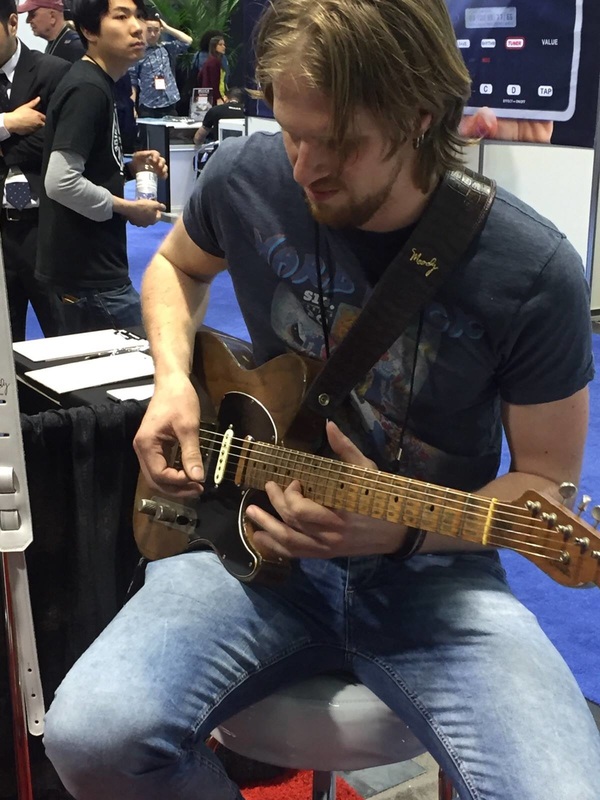
​  If you are a true Blues musician, authenticity and respect for the roots of the music is paramount. The Blues is not about technical proficiency or adulation. Playing the Blues means you must be so connected to the soul of the music that you transcend thinking about your instrument, expressing emotion rather than ability. Ambassadors of this music like BB King, Buddy Guy, Albert King, even Jimi Hendrix, Eric Clapton, and Stevie Ray Vaughn have introduced this American form to listeners around the globe. One such recipient is German guitarist Stefan Hillesheim. As a member of the German Blues band BlueSide, Hillesheim did his own share of inspiring blues fans and musicians alike in his home country. You might not think of Germany as the location of a blues music scene but bands like BlueSide have had highly successful careers and followings for more than a decade. The Blues translates in every language because it is the language of pure emotion, everyone understand this language. Although anyone can take part in the blues, the spotlight often shines on the guitarist in this genre. There is something about the wide spectrum of emotions that the guitar accesses which enables a blues guitarist to speak more clearly than others. It’s precisely this fact that has allowed Stefan to become so respected among his German musical peers and has led him to now pursue the path of a true bluesman; setting about to get in touch with the birthplace of the Blues.
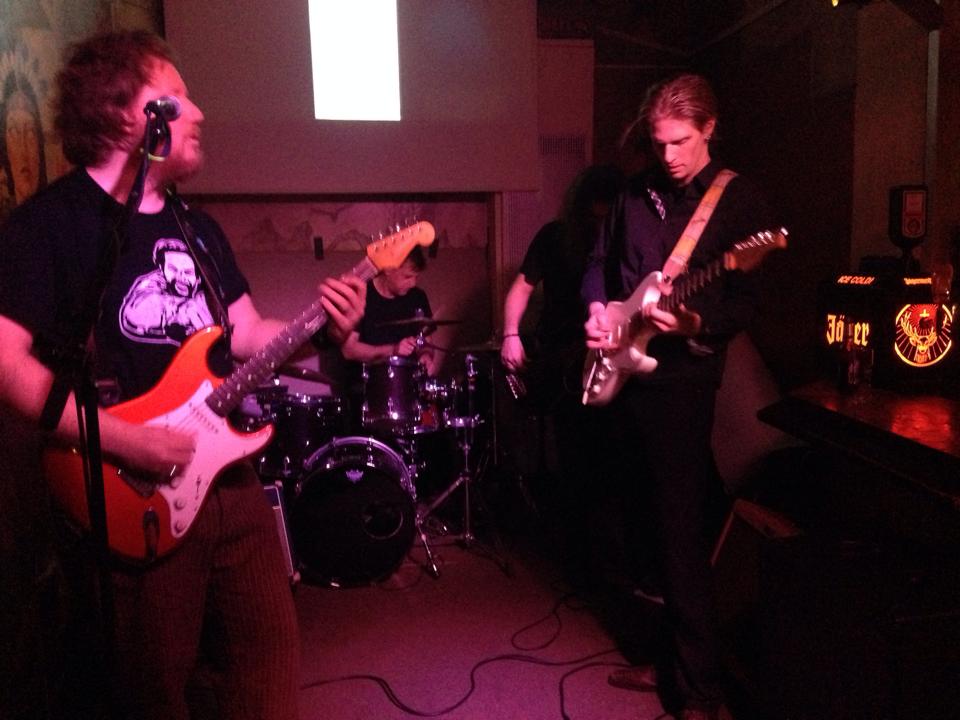
  In the early 2000’s, Hillesheim was at a Blues jam in Hillesheim, Germany and struck up a friendship with a singer/guitarist Dirk Dommermuth. The musical chemistry between the two was so natural at the jam that both understood right away that being in a band together was a great idea. This band, BlueSide, has produced four albums since 2005 and are recognized for their authentic blues influences like BB King, Robert Johnson, and many others. BlueSide often performs sold-out shows in their native Germany and on international tours across Europe. BlueSide’s recordings have been highly successful in the European Blues community, in particular their recording of “Mary Had a Little Lamb” on the “Reminiscence” album. An obvious tribute to Stevie Ray Vaughn’s recording, Stefan was careful in approaching the recording of a song made famous by one of the all-time Blues guitar greats. Stefan admits, “It’s always a long shot to perform or record a cover version of a song that was played by a guitarist of his caliber. If you try to sound exactly like Stevie you can only lose, because he played it so incredibly and you end up sounding like a copycat. I tried to put it in my own tone and personality…. definitely paying homage and touching on some of Stevie’s licks and ideas, but mostly trying to sound like myself. That’s a basic premise of the Blues; you can play the exact song as someone else but you have to put your identity into it…you have to put yourself out there.” Dommermuth describes Stefan, whether in the studio or live as, “Stefan is remarkable and driven, whether he’s up on stage or in the studio. His performances at venues drove their sold-out crowds wild, and we received highly praiseful reviews from various music publications. Our album “Reminiscence” received wonderful reviews from both critics and the public, selling extremely well. As a lead guitarist on our shows and the album, Stefan most definitely played a lead role in ensuring their success. What’s more, his fantastic performances have brought great acclaim and continued success to BlueSide as a whole. Stefan is truly one of Germany’s top guitarists in terms of skill and professional accomplishments. Few of his peers can claim to have achieved as much as he has.”
  At least part of the burgeoning Blues scene in Germany over the last two decades can be attributed to the sensibilities of its fans, who are inspired by the lifestyle of the music and musicians. Whereas a great deal of pop music is trendy and could be considered “fashionable” and “escapist”; Blues discusses the everyday pitfalls and (sometimes) joys that we all experience. Rather than avoidance and rejection of these experiences and emotions, the Blues deals with them by using the music as a catharsis; you sing about life’s ups and downs and become part of a community that encourages this process. Hillesheim adds, “Blues has become quite popular in Germany and Europe. It may not be as present on the radio as Pop, Hip Hop or Rock music, but there are a large number of clubs and festivals for Blues and Jazz. I think people in Europe mostly get into Blues because of live performances. I would say that Blues fans in Europe are true die-hard fans who still buy Albums in the form of CDs and Vinyl. They are extremely supportive and go to live performances of their favorite acts. It’s a circle of people whom are very passionate about the music they love. A community like that can support the career of a musician for a very long time. I think both the artists and the Blues fans become a family that appreciates each other.”
Picture
​  Many families do genealogy studies to get in touch with their ancestry. Often this involves a pilgrimage to the homeland of their forefathers. Stefan has now embarked on this with study of his musical ancestry by relocating to the US in pursuit of a deeper understanding of the Blues. Immersing himself in the US music community, he has sought out the players which will bring him closer to understanding the Blues as well as discovering his own unique voice. It requires commenting that he has become quite noteworthy in the US, performing in clubs as well as large venues such as the Staples Center in Los Angeles (where he performed with the award-winning band Liquid Blue). Stefan remarks, “Even though there are Clubs and Venues for Blues music in Europe, you don’t get around the fact that the blues is American roots music. To fully understand and experience the music that fascinates me so much I felt like I had to get closer to the source and get first-hand experience and input. Shortly after I arrived in the United States I started playing and developing a friendship with Tony Llorens, who was the organ and keyboard player for Albert King for more than a decade. He also played with James Brown, Buddy Guy, and Howling Wolf. Besides the fact that he is a phenomenal player, I was fascinated and amused by the “tour stories” he would tell me from his time on the road with the Albert King Band. Not only has he played with a number of my musical heroes, but he has lived a life that I always dreamed of and has now “retired” as a music teacher in Los Angeles. I’ve also had the pleasure to play for a number of African American Gospel Churches on a regular basis, which helped me to realize how close Blues and R&B music is related to spiritual and traditional American church music. These are the types of experience that a Blues musician can only get in America.”
  In his respectful pursuit of this original American musical art form, Stefan Hillesheim gives proof to the idea that the Blues speaks to everyone, if they only listen. You can be a member of a successful German band like BlueSide, a child from the Mississippi Delta, or an elderly woman from the tough streets of Chicago…it’s all the same. People being in touch with their emotions and finding a positive outlet for life’s hardships through musical expression. 
0 Comments

    Author

    We are a team of journalists and photographers who are dedicated to bringing you the most up to date news on Hollywood's who's who...

    Archives

    March 2024
    March 2023
    October 2022
    July 2022
    January 2022
    February 2021
    December 2020
    October 2020
    July 2020
    October 2019
    September 2019
    July 2019
    April 2019
    March 2019
    October 2018
    September 2018
    August 2018
    July 2018
    June 2018
    May 2018
    April 2018
    March 2018
    February 2018
    January 2018
    December 2017
    November 2017
    October 2017
    September 2017
    August 2017
    July 2017
    June 2017
    May 2017
    April 2017
    March 2017
    February 2017
    January 2017
    December 2016
    November 2016
    October 2016
    September 2016
    August 2016
    July 2016
    June 2016
    May 2016
    April 2016
    March 2016
    February 2016
    January 2016
    November 2015
    October 2015
    September 2015
    August 2015
    July 2015
    June 2015
    May 2015
    April 2015
    March 2015
    February 2015
    January 2015
    December 2014
    November 2014
    October 2014
    September 2014
    August 2014
    July 2014
    June 2014
    May 2014

    Categories

    All
    Actor
    Ad Campaigns
    Advertising
    Art Director
    Asian Actors
    Behind The Scenes
    Blogo App
    Branding
    Canada
    Canadian Actor
    Celebrity
    Child Star
    Chinese Film Industry
    Cinematographer
    Comedy
    Commercial
    Commercials
    Composer
    Creative Director
    Dancers
    Danish
    Design
    Director
    DJ Kiraz
    DJs
    Documentary
    Drama
    Eclectic Pictures
    Editor
    EDM
    Electronic
    Entertainment
    Entertainment Industry
    Events
    Fashion
    Film
    Film And Television
    Film Festivals
    Film Score
    High Fashion
    Hollywood
    Horrror Film
    International Talent
    Interview
    Japanese Clubs
    Journalist
    Model
    Motion Graphics Editor
    Music
    Musician
    Musicians
    Music Producer
    Music Videos
    News Anchor
    Photographer
    Producer
    Production Coordinator
    Production Design
    Production Desinger
    Reality TV
    Recording Engineer
    Screenwriter
    Spanish Actors
    Stuntman
    Tech
    Television
    Television Host
    Theater
    Theatre
    Time Lapse
    Tokyo
    Trance
    Triple Threat
    UK Actors
    VFX Artist
    Video Games
    Voice Over Actor
    Wardobe Department
    Writer

    RSS Feed

Powered by Create your own unique website with customizable templates.