• Home
  • Celebrity
ENTERTAINMENT LA

Multi-Award Winning Cinematographer Egor Povolotskiy!

6/10/2015

1 Comment

 
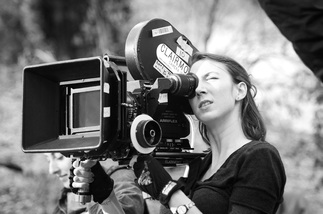
PictureCinematographer Egor Povolotskiy


Egor Povolotskiy's fascination with cinematography began at the tender age of four when he first began shooting with his parents' old Handycam back home in Moscow, Russia. Although he was always intrigued by the power of film, Povolotskiy's astute intelligence matched by his wild imagination originally led him to embark on a career in computer science and artificial intelligence.

He admits, "I thought that I was going to create robots and terminators, you know, what people think about when they think of AI. But it turned out to be very boring and in Russia AI is still very weak."

Povolotskiy concluded whilst in college that computer science was not at all what he had imagined; and to the benefit of the wide range of films he has since led to success with his exceptional abilities as a cinematographer, he claimed his rightful place behind the lens. Povolotskiy might not be building terminators anytime soon, but his career has led him to shoot photos of Hollywood legend Arnold Schwarzenegger, the man audiences around the world recognize as thee terminator.

A spectacular photographer by anyone's standards, an irreplaceable asset in his line of work as photography is the foundation of cinematography, Povolotskiy's immense talent and experience have been the defining characteristics of a countless and growing number of hugely successful films.

Sabre Dance, one of Povolotskiy’s most recent productions, tells the story of famed Soviet-Armenian Aram Khachaturian, whose works in Russia and abroad earned him a place as one of the 20th century’s most revered composers. Sabre Dance begins after Khachaturian performs a concert in Spain, which is received with great fanfare. He is invited to meet Salvador Dali, which, as one might imagine, proves to be quite an unusual experience.

Povolotskiy recalls, "This project was special for me because we had two absolutely different characters and as the cinematographer I had to tell the story from the emotional POVs of both Aram and Salvador in order to express the main idea of the film."

After its release, the film's tour of the American circuit won Sabre Dance and Povolotskiy the Grand Prize at the 2015 USA Film Festival, an Honorable Mention at the 2015 Rochester Film Festival, and other nominations for awards at both the USA Film Festival and the San Louis Obispo Film Festival.

Povolotskiy’s work on We Are Enemies is another prime example of his storytelling vision and ability to express difficult and philosophical ideals through the art of his camera work. It tells the story of two World War 2 soldiers on opposing sides in the war. One of the soldiers is tasked with executing the other, and the audience sits in high tensions as he grapples with having to take the life of another man.

The film, which examines the concept of universal humanity regardless of nationality during war, earned the respect and acclaim of festival judges nationwide. It was nominated for awards at the Phoenix Film Festival, the Santa Fe Film Festival, the Arizona International Film Festival and The Big Easy Film Festival. It also won multiple prizes at the prestigious Rochester International Film Festival.

Because of his expertise in computer science, which includes a master’s degree in artificial intelligence, Povolotskiy was specifically chosen to work with director Atryom Miroshin on the film Terminal State. Primarily filmed against a green screen, Povolotskiy’s artistic cinematic display of a girl who survives the apocalypse is gripping, and shows how his incredible talent can truly stand out even when his shots are rendered in the thoroughly modernist medium.

A standout cinematographer in a field where only the very best creative minds meet success, Povolotskiy has made a niche for himself as a visionary who can truly adapt to the needs of any director or writer. It is not simply his ability to materialize the conceptual, however, which separates him from his peers, but his ability to turn those concepts into original and distinctly unique productions. His incredible visionary eye turns stories into gripping cinematic experiences, a need which Hollywood is perpetually seeking to fulfill.
1 Comment

Jonathan Bensimon Continues to Impress Audiences with his Captivating Work

2/11/2015

1 Comment

 
Originally from Montreal, Canada, Jonathan Bensimon has been taking the entertainment industry by storm on an international level, as he continues to wow audiences with his impeccable work as both a director and cinematographer.

Bensimon first rose to success in the film industry over a decade ago after working as the cinematographer on a commercial for telecommunications giant Nokia.

About the commercial Bensimon says, "We created an operatic piece where we blew up TVs, Cameras and stereos and we would get beautiful highlights and light glimmers as all these pieces flew through the air, and at the end the footage would play backwards to create the phone. It was a mix of artistry and technology blending."

One of the perks of being sought after by clients of this caliber is that Bensimon is always privy to using the industry's most cutting edge technology. Bensimon shot the footage for this particular commercial in super-slow motion, using a prototype digital camera that could record 1500fps, something he says at the time, "Was a new frontier for digital cinema."

Eventually, Bensimon's unique visual style as a cinematographer grabbed the attention of an executive producer who, to make a long story short, put the talented young filmmaker on a path towards directing in 2006. Since then, Bensimon has gone on to work as the director and cinematographer on an impressive list of films, music videos and commercials.

In 2014 Bensimon received several awards for his work, including a Gold, a Merit, and two Silver Awards at the Advertising and Design Club Of Canada (ADCC) for the film Zombie, which also took home three awards at the Applied Arts Advertising & Interactive Awards and made it onto the Cannes Lions' Shortlist. The film also received the Gold Pro Bessie Award at the 2015 Bessie Awards, one of the biggest awards shows in Canada.

Zombie follows Antoine Zombé, a Canadian actor and zombie who struggles to break into the American film industry, which doesn't flock to his easy-going Canadian nature, that is, until he lets go of his niceness and becomes the kind of rabid angry zombie audiences have come to expect.

"I took the film in a biopic direction where we follow this zombie actor's career. We start with his struggles and go on a journey that leads us to the eventual breakthrough into the business," explains Jonathan Bensimon. "I worked very closely with the lead actor (Ian Matthews) to create a comical tone, that was simultaneously absurd and relatable."

Prior to creating the film Zombie to promote the Canadian Film Festival (CFF) in 2014, Bensimon worked as both the cinematographer and director on several other projects for the festival including the short film Canadian Sin, which garnered a Silver Award at the 2013 London International Film Festival and the Gold Award in the cinema category at the 2013 ADCC. Bensimon also worked as the director and cinematographer on Canadian Mafia for CFF, which took home the Silver Award at the 2013 ADCC, and two awards at the Applied Arts Advertising & Interactive Awards.

Even in the early stages of his career, Jonathan Bensimon was widely recognized throughout the industry as someone destined for greatness, something proven by the fact that several management and production companies across Canada vied for the chance to represent him for his work. Prior to finding representation for his music videos with The Field, Spy Films (Toronto) and Les Enfants (Montreal), Bensimon was represented by Industry Films.

While working with Industry Films, Jonathan Bensimon worked as the cinematographer and director on several high-profile commercials for global brands including "Passion," "All You Want," "Relief Worker" and "Father of the Bride" for Tylenol, "His and Hers," "Test Drive," "Trade In," "Checkered Flag" and "Silence" for Honda, as well as Nissan's "Choosing," Villagio's "Everyone's Favorite," Advil's "Advil Air," Honey Bunches of Oats' "Multiple Mouths" and countless others.

Although Bensimon has become a highly sought after director and cinematographer for commercials, his talents in the field extend far beyond commercials alone. In 2010 he directed, as well as worked as the cinematographer on the film Tokyo/Glow, which received the Bronze Award in the film category at the Telly Awards. Upon his first visit to Tokyo, Bensimon was not only mesmerized by the beauty of the city, but was also drawn to one of the city's unique features-- a cross-walk sign, which ultimately led him to create the film Tokyo/Glow.

Bensimon recalls, "I was in awe of the entire city, but something really simple caught my attention: the cross walk sign, rather than being a stick figure like every other crosswalk sign in the world this one had a suit and a fedora. I wanted to bring him to life and see him journey through the city."

Incorporating stop-motion animation, Bensimon's film captures the beauty of the city's nightscape alive with movement as one man, who is literally lit up like a light bulb, moseys through the busy streets.

Bensimon explains, "Our lead actor was wrapped in a 100 meters of LED rope light as he walked at a snails pace in order for the world around him to move at rapid speed."

Aside from receiving a Telly Award, Tokyo/Glow reached incredible success in Canada where it aired nationwide on Bravo!, in addition to being featured on several blogs including Style.com, Tokyomango.com, Madewithjapan.com, and many more.

About the way his work as both a cinematographer and director affect his overall approach to a project Bensimon says, "Being a director/cinematographer allows me to see things in a very unique way, it makes my preparation very intense and makes me develop a special relationship with the actors and the crew because I constantly look at things from multiple angles. Also, it allows me to have a very clear idea of the direction of the mood that will be in the final piece."

Over the past decade Jonathan Bensimon has created an unparalleled reputation as an artist who is able to not only morph his creativity to the fit needs of his vast range of commercial clients, but one who is able to continually create groundbreaking work and frankly, we can't wait to see what he comes up with next!

Make sure to check out Jonathan Bensimon's "Social Innovation" commercial for Hitachi below, where he was both the cinematographer and director, and if you would like to see more of this talented filmmaker's work you can check out his profile on Spy Films, Les Enfants and The Field , the production companies currently representing him.


Hitachi - Social Innovation - Jonathan Bensimon from Industry Films on Vimeo.

Picture
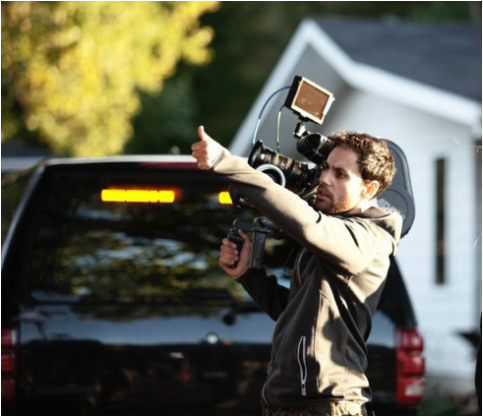
Director and cinematographer Jonathan Bensimon
1 Comment

Behind the Scenes Spotlight: Award-Winning Cinematographer Guy Pooles

2/2/2015

0 Comments

 
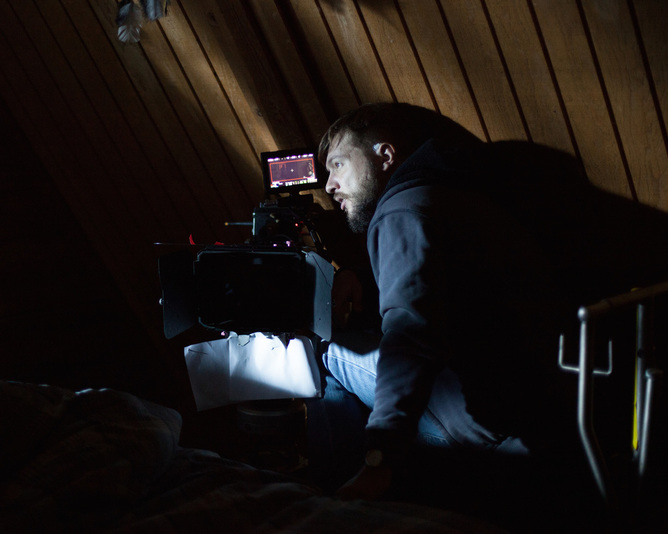
PictureCinematographer Guy Pooles
One cannot overstate the integral role of the cinematographer in bringing a director's vision to the screen. Often referred to as the director of photography (DP), it is one of the most challenging jobs in the film industry. Not only do these individuals set the film’s tone by carefully crafting images to create a visual language, but they also serve as chief of the film's camera department and lighting crew. The role of DP befits a person who is able to use both their right brain and their left brain, as this work inevitably requires the creative capacity to infuse images with life and emotion in addition to vast knowledge concerning technical aspects of illumination and effective use of camera techniques.

Celebrated English cinematographer Guy Pooles says, "It is the job of the cinematographer to tell the story visually. I collaborate with the director to devise and build a visual language that ties into their vision for the film, then I move forward and manage the Lighting, Grip and Camera departments to ensure that every creative and logistical choice made is in keeping with the execution of that vision. It is my job to hone each visual element, be it lighting, color or composition, to a place where it complements and elevates the drama of the narrative."

Pooles discovered his desire to work in film in his youth, but it wasn't until several years ago, while attending Royal Holloway, University of London, that he realized cinematography was his true calling. Though incredibly demanding, Pooles sees cinematography as an avenue for endless exploration into the way images transcend verbal language.

"In a way, the emotive power of cinematography is an infinite mystery. I’m not entirely sure why a certain lens on a certain camera in a certain place can make me feel safe and comforted, or why a particular quality of light raking across a wall can fill me with sadness, all I know is that they do. There’s a humanity encoded within imagery that transcends language or definition, and the exploration of this is forever surprising and enjoyable," he explains. "It is an unquenchable curiosity that draws me towards cinematography."

Pooles has fulfilled his dream of working internationally as a professional cinematographer, and he has been honored with numerous awards for his work, including the American Society of Cinematographers’ Linwood Dunn Heritage Award, which he received last year for his work as cinematographer on the film Dirty Laundry. 

Over the years, Pooles has amassed an a impressive repertoire of work as a cinematographer, including films like Wake, Happenstance, What Must Be Done, You're a Little Late, Martha, and a documentary entitled Best of The Pacific Northwest.

One of Pooles' most recent projects as a cinematographer is the film Open 24 Hours, a dark comedy directed by Henry Chaisson. According to Pooles, "Our goal for the film was to take an utterly mundane setting --a secluded, small town, gas station-- and construct a visual language for the film to suggest that a sinister and unusual energy existed beneath the surface of this seemingly-harmless world."  

After testing several lens systems to achieve the aesthetic goal, Pooles and his team selected Cineovision Anamorphic Lenses from Old School Cameras, as well as a RED Epic Dragon camera body with a 6K sensor. Pooles explains, "For me, the joy of the Cineovision lenses was that they possessed all of the visual characteristics of an anamorphic lens that I enjoy -- softness, flaring and fogging, slight breathing/distortion -- but with a subtlety that allowed the lenses to still be easy to work with on set." 

A testament to the film's powerful imagery and the quirky story it portrays, Open 24 Hours was recently chosen as an Official Selection of the 2015 Hollywood Reel Independent Film Festival where it will screen in February. Guy Pooles’s work has demonstrated that he has the kind of adaptable creative vision that can endure the test of time, and film is not his only area of expertise.

Last year Pooles was asked to work as both director and cinematographer for Bryarly Bishop’s music video for the song "In the Bright Daylight." The indie musician's budget for the video paled in comparison to Pooles' recent projects, but because he loves a good challenge, he brainstormed until he devised a concept that would fit both the song and the musician's budget. Pooles says, "The key to keeping the budget so low was the utilization of natural light."

Pooles turned to the Sony a7S using a native ISO of 3200 and a S-Log 2 curve, which he says possesses incredible latitude and very high sensitivity, making a large and expensive lighting package unnecessary. "I needed only to utilize the overcast ambient daylight coming through the window of the location as my key light, and then shape it to my desired look with plenty of negative fill," he explains. "For a low-budget music video such as this, the minimalist approach worked perfectly, allowing the shoot to be not just cheap, but also fast."

Looking to the future, Pooles is slated to travel to China later this year where he will work as the cinematographer on an upcoming film. He says, "My wish is to keep moving forward and to try new things. I think the mark of a good cinematographer is the ability to move from genre to genre and from medium to medium whilst leaving their own personal style at the door."


0 Comments

Leading Cinematographer Kristin Fieldhouse!

12/23/2014

0 Comments

 
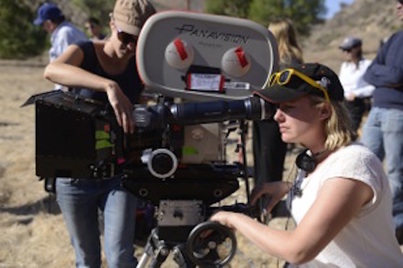
PictureCinematographer Kristin Fieldhouse
As an audience, when we sit down to watch a film we generally do not consider shot by shot the immense work that has gone in to creating the moving story unfolding before us, after all, it’s not the technical setup that pulls us in, it is the story.

For cinematographer Kristin Fieldhouse, maintaining the integrity of the story is the cornerstone of her creative process when it comes to taking a project from its written form to the visual end product.

Kristin Fieldhouse explains, “A cinematographer is the ultimate gatekeeper of the image. They are there to make choices in how a story is told visually and to help convey the artistic information through their use of camera and lighting choices.”

Kristin is comparatively modest when it comes to talking about the powerful role she plays in the creation of a film or television series, a feature of her character that not only makes her a rarity in the entertainment industry, but something that has made her a highly sought after cinematographer as well. When a cinematographer’s ego and creative vision are not inline with the vision of the director and the overall story the resulting product is more often than not, incoherent; and while the project might be visually appealing, the substance of the work usually ends there. This has and will never be the kind of work we see from Kristin Fieldhouse as her passion for the story and her commitment to the collaboration process are most important.

Although individual praise is in no way a part of Kirstin’s motivation to work on a project, the caliber of her work has made it virtually impossible for her to go unrecognized. Her work as the cinematographer on the recent film Young Americans garnered her the Best Cinematography Award at the Milledgeville Film Festival and the John Kelly Award for Excellence in Cinematography at the Fresno Film Festival earlier this year. Written and directed by Kevin Lacy (The Man Who Found DB Cooper, I Love Sick, Numerica, They Put a Man on the Earth), Young Americans follows a broke young woman who is on the verge of aging out of foster care, and so, in an effort to gain financial stability she plans a bank robbery with the help of an admirer and former classmate. So far the film has received 11 awards including the American Film Institute’s Richard P. Rogers Spirit of Excellence Award, the IFS Award at the Independent Filmmakers Showcase IFS Film Festival, the Audience Awards at the Ashland Independent Film Festival and the Rhode Island International Film Festival, the Audience Choice Award at the Sedona International Film Festival, and others.

“As part of my commitment to the team I was able to secure the Technicolor Film Grant (only given once a year to a worthwhile project), which gave us a large donation of film stock,” explains Kristin. “My role with the film took place over a year long period whereby I was fully involved with script development, location scouting, logistical planning, camera testing, film stock testing, shot list development, storyboards, booking crew and securing gear. The film came together very well because of a strong team.”

A testament to Kristin Fieldhouse’s impeccable creative talent as a cinematographer, Young Americans was recently bought by mass media leader Condé Naste and will be shown to audiences across the world through several video on demand outlets including Netflix and Hulu.

Over the years Kristin has worked with entertainment industry icons like Johathan Demme, Edward Norton, Liv Tyler, Tim Roth, William Hurt, Colin Farrell, Jennifer Lawrence, Kate Beckinsale, Jessica Beil, William Shatner and many more. She has also been a key contributor to the camera departments of the hit television shows Warehouse 13, Unrivaled, Latest Buzz, Alphas, Mob Stories II, Flashpoint, Happy Town, Abra Ca Debra, Nikita and Covert Affairs.

With unwavering dedication to her craft Kristin Fieldhouse is the kind of cinematographer whose contributions ensure the success of every project she touches, and we are excited to see what’s next for her.


0 Comments

35mm or Digital, Cinematographer Johanna Coelho does it all!

9/16/2014

0 Comments

 
Picture
French cinematographer Johanna Coelho is not only a phenomenal director of photography who has a background working with an array of different genres, but she is capable of shooting on any format, a feature that sets her apart from the masses.

"Film and digital have the same purpose: create images for telling a story. There’s a lot of discussion going on about what is best between shooting on film or digital. For me in a sense, it's like having a discussion about which lense to use. It's a decision that concerns one’s choice, taste and style,” explained Coelho.

With the global technological advancements we have experienced over the last two decades, the most noticeable shift when it comes to the film industry can be found in the format in which films are shot. For instance, feature films that were once shot on 35-millimeter filmstrips are now predominantly shot on digital, the reason being that digital technology is cheaper to reproduce, and easily transferrable.

The question of whether to shoot on digital or 35mm will always come down to the aim of the director and what the film’s director of photography (DP) feels is the most viable option for producing the director’s vision. However, for the DP to even consider taking one of these two routes they must first be capable of shooting on both formats, a skill Johanna Coelho can accomplish in her sleep. 

“I think it's amazing to want and know how to shoot both, because today we still have a choice, ” said Coelho. “I pick one over another depending on the project, story, shooting conditions, and visual style. There is a sharpness to digital that is really appreciated nowadays, and film will always give you this beautiful grainy image that gives a really cinematic aspect to your film. They do not look the same, and that's the great thing about it.”

Coelho’s talent as a cinematographer and her ability to choose whether to shoot on film or digital depending on what will be the most compelling for the overall project, has allowed her to be far more creative than most in the craft. 

The film Broken Leaves, which was directed by award-winning director Sasa Numic, follows two teenage best friends, Lana and Annie, as they go on a picnic with three boys in the woods. The film focuses on Lana’s jealousy over the attention Annie is receiving from the boys, a feeling that quickly turns to anger and leads her to do something that she immediately regrets.

Coelho worked her magic as the director of photography for the film, which was shot solely in the woods using 35mm film. Coelho’s use of the perfect filter and film, in addition to the way she captured the sunlight breaking through the trees creates a hazy, almost dreamlike feeling, one that visually supports the film’s storyline of Lana’s rash actions being grounded somewhere outside of reality. 

"Broken Leaves is a story that is supposed to feel like it was shot in the 70's, so I felt shooting on film was appropriate in order to give a realistic and beautiful grain to the images,” explained Coelho.

“Also, there is a really nice warm look created with the filter I used in the camera throughout the whole film. This particular color created with the filter worked because of the type of film I chose to use, Kodak Vision 3 5213, 200T. So it wasn’t only about the grain, but also about the choice of emulsion. Colors on film can be truly amazing if you know how to use them.”

As the director of photography for the film The Black Room, which was also shot on 35mm film and follows a convicted woman who dances away the reality of her jail sentence by imagining she is a cabaret dancer, Johanna Coelho shows her finesse and versatility with the camera. Because The Black Room was based on the incredible camera tricks invented by French illusionists and cinema genius Georges Méliès, Ms. Coelho chose to shoot on film in order to remain authentic to Méliès’ discoveries.

Creating a mesmerizing sequence of imagery using double and triple exposures on film, Coelho draws audiences in with the way she captures the character’s movements to a place where they too forget that the woman they are watching is in jail.

Concerning the use of double and triple exposure, Coelho admits, “We can do that with digital now, but it's not as challenging or as fun! Making all of your effects happen in the camera is an incredible experience that shows you the real power of shooting on film.”  

While the up and coming generations will most likely switch to shooting solely digital, there are elements of 35mm that continue to be widely cherished throughout the film industry today, and Johanna Coelho’s films serve as a testament to the importance of cinematographers having the capacity to work with both.

“Film is the very first format of cinema, and I think there is something really special about that,” said Coelho.


0 Comments

    Author

    We are a team of journalists and photographers who are dedicated to bringing you the most up to date news on Hollywood's who's who...

    Archives

    March 2024
    March 2023
    October 2022
    July 2022
    January 2022
    February 2021
    December 2020
    October 2020
    July 2020
    October 2019
    September 2019
    July 2019
    April 2019
    March 2019
    October 2018
    September 2018
    August 2018
    July 2018
    June 2018
    May 2018
    April 2018
    March 2018
    February 2018
    January 2018
    December 2017
    November 2017
    October 2017
    September 2017
    August 2017
    July 2017
    June 2017
    May 2017
    April 2017
    March 2017
    February 2017
    January 2017
    December 2016
    November 2016
    October 2016
    September 2016
    August 2016
    July 2016
    June 2016
    May 2016
    April 2016
    March 2016
    February 2016
    January 2016
    November 2015
    October 2015
    September 2015
    August 2015
    July 2015
    June 2015
    May 2015
    April 2015
    March 2015
    February 2015
    January 2015
    December 2014
    November 2014
    October 2014
    September 2014
    August 2014
    July 2014
    June 2014
    May 2014

    Categories

    All
    Actor
    Ad Campaigns
    Advertising
    Art Director
    Asian Actors
    Behind The Scenes
    Blogo App
    Branding
    Canada
    Canadian Actor
    Celebrity
    Child Star
    Chinese Film Industry
    Cinematographer
    Comedy
    Commercial
    Commercials
    Composer
    Creative Director
    Dancers
    Danish
    Design
    Director
    DJ Kiraz
    DJs
    Documentary
    Drama
    Eclectic Pictures
    Editor
    EDM
    Electronic
    Entertainment
    Entertainment Industry
    Events
    Fashion
    Film
    Film And Television
    Film Festivals
    Film Score
    High Fashion
    Hollywood
    Horrror Film
    International Talent
    Interview
    Japanese Clubs
    Journalist
    Model
    Motion Graphics Editor
    Music
    Musician
    Musicians
    Music Producer
    Music Videos
    News Anchor
    Photographer
    Producer
    Production Coordinator
    Production Design
    Production Desinger
    Reality TV
    Recording Engineer
    Screenwriter
    Spanish Actors
    Stuntman
    Tech
    Television
    Television Host
    Theater
    Theatre
    Time Lapse
    Tokyo
    Trance
    Triple Threat
    UK Actors
    VFX Artist
    Video Games
    Voice Over Actor
    Wardobe Department
    Writer

    RSS Feed

Powered by Create your own unique website with customizable templates.